
Cognitive-Behavioral Therapy (CBT)
When Thought Patterns Feel Trapped
The thoughts you have about yourself, others, and the world around you shape how you feel and behave. Sometimes these thought patterns become rigid or distorted in ways that keep you stuck, even when you're trying to move forward.
Maybe you find yourself anticipating the worst in situations. Maybe negative self-talk has become so automatic you barely notice it anymore. You may be caught in cycles where certain thoughts trigger strong emotions, which then lead to behaviors that reinforce the original thoughts.
These patterns can influence more than just your moment-to-mood. They can affect your decisions, relationships, physical symptoms, ability to cope with stress, and the way you approach challenges in life.
At Jeanes Mental Health Services, we provide cognitive behavioral therapy (CBT) for adults navigating anxiety, depression, and other mental health concerns. Our approach is evidence-based, practical, and focused on helping you develop skills you can use both in and outside of sessions. We keep your individual needs, goals, and values at the center of the work.
Understanding How CBT Can Help
CBT is based on the idea that our thoughts, feelings, and behaviors are interconnected. By learning to identify and change unhelpful thinking patterns, we can create meaningful shifts in how we experience ourselves and navigate difficult situations.
CBT may be particularly helpful if you're experiencing:
Persistent worry, anxiety, or fear that feels hard to control
Negative self-talk or harsh self-criticism
Depression, low mood, or hopelessness
Avoidance behaviors that limit your life or relationships
Catastrophic thinking or assuming the worst will happen
All-or-nothing thinking or black-and-white reasoning
Difficulty tolerating uncertainty or discomfort
Stress reactions that feel overwhelming or unmanageable
Behaviors that provide short-term relief but cause long-term problems
Rumination or getting stuck in repetitive thought loops
Challenges with problem-solving or decision-making
Physical symptoms that seem connected to stress or anxiety
Difficulty sleeping related to racing thoughts or worry
Patterns you recognize but feel unable to change on your own
You don't have to wait until these patterns feel unbearable to seek support. Sometimes therapy begins with recognizing that you've developed habits of thinking that no longer serve you.
Understanding What Is Happening Beneath the Surface
Cognitive behavioral therapy looks at how thoughts, emotions, and behaviors interact to create and maintain difficult patterns. What seems like a single problem is often part of a larger system involving automatic thoughts, underlying beliefs, coping strategies, and environmental factors.
Our therapists take time to map out the specific patterns that affect you rather than applying a one-size-fits-all approach.
Together, we may explore:
Identifying Automatic Thoughts: Learn to catch the quick, automatic thoughts that arise in difficult situations and understand their impact on your emotions and actions.
Challenging Distorted Thinking: Examine whether certain thought patterns reflect reality accurately or whether they involve cognitive distortions that may be maintaining distress.
Understanding Core Beliefs: Explore deeper beliefs about yourself, others, and the world that may be shaping how you interpret experiences and respond to challenges.
Behavioral Activation: Work to gradually increase engagement in meaningful activities that support mood, motivation, and a sense of accomplishment.
Exposure and Response Prevention: When avoidance is maintaining anxiety, develop gradual, supported approaches to facing feared situations or thoughts.
Skill Building and Practice: Learn practical techniques for managing difficult thoughts and emotions, including relaxation strategies, problem-solving, and communication skills.
Homework and Real-World Application: Sessions include opportunities to practice new skills between appointments so progress extends beyond the therapy room.
The goal isn't to convince you to think positively or dismiss difficult emotions. It's to help you develop a more balanced, flexible relationship with your thoughts and build practical skills that support your well-being.
Insurance & Access
We accept most major insurance plans, including Blue Cross Blue Shield, Cigna, Optum, Aetna, UnitedHealthcare, and TRICARE. Coverage varies by state and plan, and we're happy to help you check your eligibility before your first session.
Why Telehealth Works
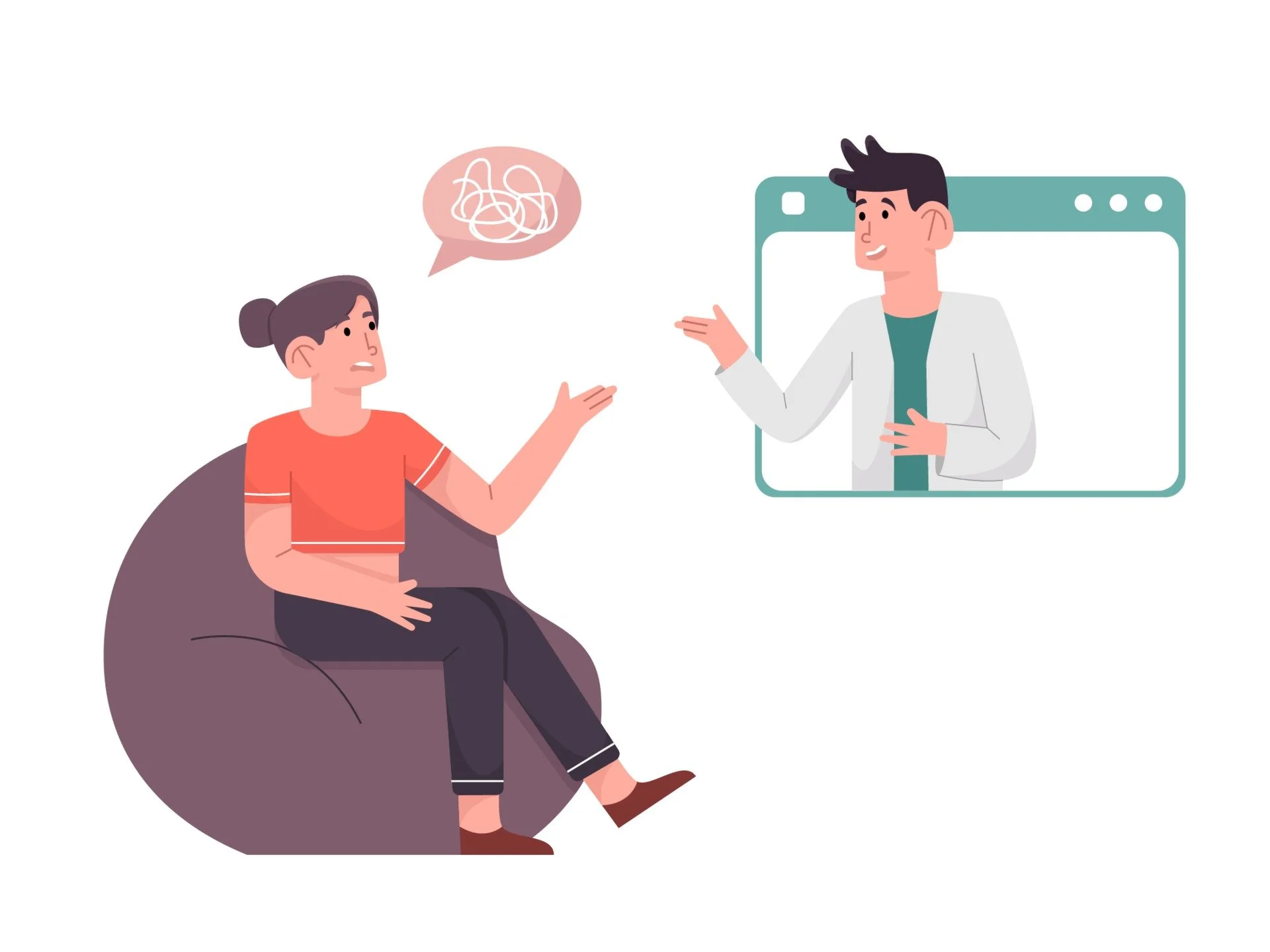
Discussing mental health concerns requires a space where you can feel comfortable being honest. Telehealth allows you to meet with your therapist from a private location without adding another appointment or commute to your schedule.
We use Zoom to provide secure and confidential therapy sessions, allowing you to connect with your therapist from wherever you are in Georgia or North Carolina.
CBT works well in a telehealth setting because the focus is on practical skill-building that you can apply in your everyday environment. Whether you're seeking short-term symptom relief or working on longer-term pattern change, sessions can provide a dedicated space to develop tools you'll continue using.
Ready to Talk to Someone?
Unhelpful thought patterns can keep you feeling stuck even when you're working hard to change. Cognitive behavioral therapy can offer a private, supportive space to understand the patterns affecting you, develop practical skills, and create lasting improvement in how you navigate challenging situations.
Whether you're struggling with anxiety, depression, negative thinking, avoidance behaviors, or patterns that feel hard to shift on your own, CBT can help you approach these concerns with greater understanding, practical tools, and intention.
[Schedule Your First Session →]
Or call us today at 678-805-7181
or email info@jeanesmentalhealth.com.
We're here to provide a compassionate, non-judgmental space where you can speak openly about what you're experiencing. Our therapists will work with you to identify thought and behavior patterns that may be affecting your well-being and develop a path forward that reflects your needs and goals.